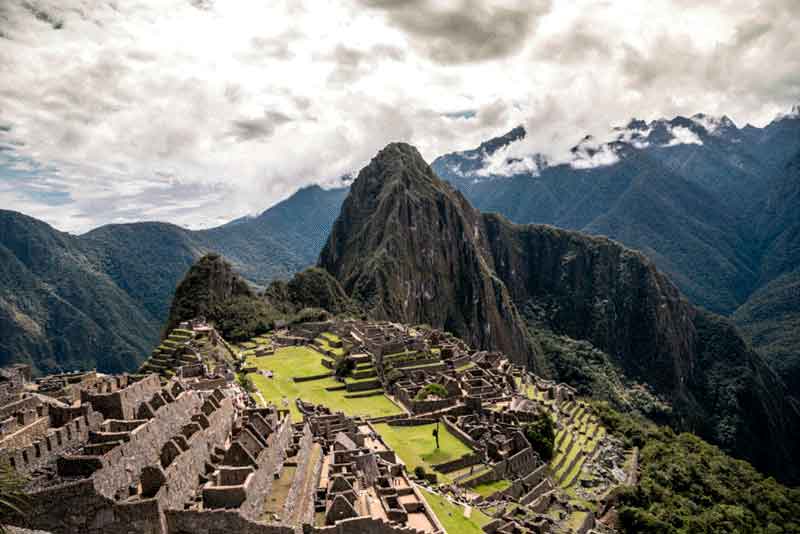
Peru’s government said Saturday it will push a new round of measures at Machu Picchu aimed at keeping tourism growth from outpacing conservation, signaling a more tightly managed phase for the country’s most important archaeological destination.
The statement came during the first ordinary 2026 session of the Machupicchu Management Unit, or UGM, the multisector committee responsible for the sanctuary’s overall management, protection and use.
“We will promote innovative solutions that balance tourism growth with the conservation of this legacy,” said Foreign Trade and Tourism Minister José.
The meeting brought together Cusco regional Gov. Werner Salcedo, who chairs the body, along with Culture Minister Fátima Altabás, Environment Minister Nelly Paredes and Machu Picchu district Mayor Elvis La Torre. Officials also reviewed the new rail service for Inca Trail porters on the Ollantaytambo-Machu Picchu route, as well as rail safety and train availability to the sanctuary.
Culture Ministry officials, meanwhile, updated the group on decisions adopted by UNESCO’s World Heritage Committee in July 2025 and on efforts to launch an autonomous platform for ticket sales to the llaqta, the Inca citadel at the heart of the sanctuary.
The discussion comes just days after Peru formally approved the new Master Plan for the Historic Sanctuary of Machu Picchu, a document that will govern management of the protected area through 2031. Published this week in El Peruano, the plan is described by authorities as the top-level planning instrument for the sanctuary.
That matters because the plan goes well beyond ticketing. According to Andina’s reporting, it lays out objectives tied to archaeological research, restoration, biodiversity protection and sustainable tourism, while also acknowledging threats that include fire risk, habitat pressure, irregular visitation and damage to pre-Hispanic pathways.
Taken together, Saturday’s meeting and this week’s approval of the 2031 plan suggest Peru is trying to move the Machu Picchu debate onto broader ground. The issue is no longer only how many people visit the site, but how the state manages trains, access, conservation and long-term protection across a much larger cultural and ecological landscape.